
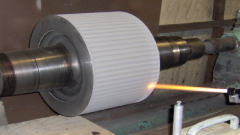
WEAR RESISTANT COATINGS
PROTECT AGAINST ABRASION, EROSION, CORROSION, FRETTING/GALLING, CAVITATION, BRINELLING.
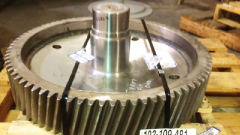
REPAIR COATINGS
NO NEED TO SCRAP AN EXPENSIVE PART. REPAIR OR BUILD UP TO A SPECIFIED SIZE. EXTEND PART LIFE.
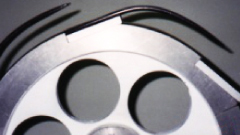
RELEASE COATINGS
FEATURING DURA-SLIK™ FLUOROPOLYMER COMBINED WITH THERMAL SPRAYED COATING PROVIDES WEAR RESISTANCE ALONG WITH RELEASE PROPERTIES.
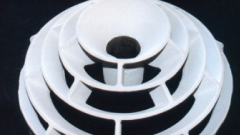
THERMAL BARRIER PROTECTION COATINGS
RESISTS TEMPERATURES UP TO 3000° F. ALLOWS THE USE OF LESS EXPENSIVE SUBSTRATE.
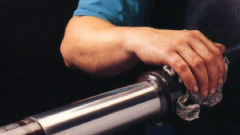
LOW COEFFICIENTOF FRICTION COATINGS
COATED COMPONENTS HAVE THE ABILITY TO PERFORM AT HIGHER SPEEDS.
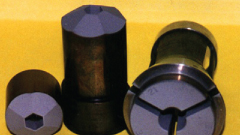
SURFACE TRACTION COATINGS
Long lasting surface finishes that prevent slippage, interruptions & breaks. Improves web tracking and tension control.
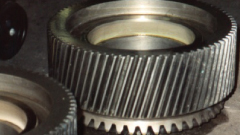
BRUSH PLATING
Repair or rebuild to a specified size, tolerance and surface finish. Plate an entire surface or target a small localized area.
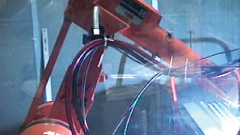
GENERAL CAPABILITIES
Services, coating features, part size capability.
Electroless Nickel Plating: A High-Performance Surface Solution for Industrial Components
Electroless nickel plating is one of the most reliable and versatile metal finishing processes used across modern industries. Unlike conventional electroplating, this autocatalytic process deposits a uniform nickel-phosphorus alloy coating without the use of electrical current, making it ideal for complex geometries, precision-machined parts, and components requiring superior corrosion and wear resistance.
From aerospace and oil & gas to manufacturing, mining, power generation, and heavy equipment, electroless nickel plating extends component life, minimizes downtime, and improves equipment reliability under demanding operating conditions.
What Is Electroless Nickel Plating?
Electroless nickel plating is a chemical deposition process that applies a nickel alloy coating to a metal substrate without electricity. Instead of relying on an external power source, the plating bath uses a reducing agent—typically sodium hypophosphite—to initiate an autocatalytic reaction that deposits nickel evenly across the entire surface.
Because the process does not depend on electrical current distribution, the coating thickness remains highly uniform regardless of part geometry. Internal passages, blind holes, recessed features, and intricate contours receive consistent coverage that is often difficult or impossible to achieve with conventional electroplating.
The resulting coating generally contains nickel and phosphorus, with phosphorus content influencing hardness, corrosion resistance, magnetic properties, and heat treatment response.
How Electroless Nickel Plating Works
The electroless plating process involves several carefully controlled stages:
1. Surface Preparation
Successful plating begins with thorough cleaning and preparation. Oils, oxidation, machining residues, and contaminants are removed through degreasing, chemical cleaning, and acid activation.
2. Chemical Deposition
The prepared component is immersed in a heated plating bath containing dissolved nickel salts and a reducing agent. A controlled chemical reaction deposits a nickel-phosphorus alloy directly onto the substrate.
3. Uniform Coating Growth
The coating builds evenly across all exposed surfaces regardless of orientation or geometry, producing excellent thickness consistency.
4. Optional Heat Treatment
Many industrial components undergo post-plating heat treatment to significantly increase coating hardness through precipitation hardening.
Key Advantages of Electroless Nickel Plating
Exceptional Corrosion Resistance
Electroless nickel provides excellent protection against:
- Moisture
- Salt exposure
- Industrial chemicals
- Acidic environments
- Alkaline solutions
- Marine conditions
High-phosphorus coatings are particularly valued for aggressive corrosive applications.
Outstanding Wear Resistance
The dense nickel-phosphorus coating significantly improves resistance to:
- Sliding wear
- Abrasion
- Galling
- Fretting
- Surface fatigue
Heat-treated coatings can achieve hardness levels approaching or exceeding many hardened steels.
Uniform Thickness on Complex Parts
One of the greatest advantages of electroless nickel plating is its ability to produce consistent coating thickness on:
- Internal bores
- Threads
- Sharp corners
- Deep recesses
- Blind holes
- Complex machined geometries
This uniformity minimizes post-machining while maintaining tight dimensional tolerances.
Excellent Lubricity
Electroless nickel exhibits a naturally low coefficient of friction compared to many untreated metals, improving:
- Sliding performance
- Wear life
- Component efficiency
- Assembly characteristics
Improved Dimensional Accuracy
Because coating thickness is extremely consistent, electroless nickel plating is commonly selected for precision components requiring minimal dimensional variation.
Heat-Treatable Surface
Post-plating heat treatment can dramatically improve hardness, making the coating suitable for severe wear applications without sacrificing corrosion resistance.
Types of Electroless Nickel Coatings
Low-Phosphorus Electroless Nickel
Typically containing 2–5% phosphorus, these coatings provide:
- Higher hardness
- Excellent wear resistance
- Better machinability
- Good solderability
Often used for mechanical components subject to heavy wear.
Medium-Phosphorus Electroless Nickel
Containing approximately 6–9% phosphorus, this is the most widely used formulation because it balances:
- Corrosion resistance
- Hardness
- Wear performance
- Cost-effectiveness
Suitable for general industrial service.
High-Phosphorus Electroless Nickel
Containing approximately 10–13% phosphorus, these coatings deliver:
- Maximum corrosion resistance
- Excellent chemical resistance
- Non-magnetic characteristics
- Superior protection in aggressive environments
Frequently used in chemical processing and marine industries.
Common Industrial Applications
Electroless nickel plating serves numerous industries where reliability and durability are essential.
Oil and Gas
Critical components include:
- Valve bodies
- Pump shafts
- Flow control equipment
- Downhole tools
- Sealing surfaces
These coatings protect against corrosion, erosion, and abrasive service conditions.
Aerospace
Aircraft components benefit from:
- Uniform coating thickness
- Weight reduction
- Corrosion resistance
- Precision dimensional control
Applications include landing gear components, hydraulic systems, and actuator parts.
Manufacturing
Industrial production equipment frequently uses electroless nickel on:
- Rollers
- Molds
- Dies
- Precision fixtures
- Machine tooling
The coating reduces maintenance while extending production uptime.
Mining
Mining equipment experiences severe abrasive wear.
Electroless nickel helps protect:
- Hydraulic cylinders
- Pump components
- Wear plates
- Processing equipment
Food Processing
Because electroless nickel provides a smooth, uniform surface with excellent corrosion resistance, it is widely used on:
- Mixing equipment
- Filling machinery
- Conveyor components
- Packaging systems
Automotive
Automotive manufacturers utilize electroless nickel for:
- Fuel system components
- Transmission parts
- Brake components
- Engine hardware
- Precision machined assemblies
Electroless Nickel vs. Electroplating
|
Feature |
Electroless Nickel Plating |
Electroplating |
|
Electrical Current |
Not Required |
Required |
|
Coating Uniformity |
Excellent |
Varies by Geometry |
|
Internal Surface Coverage |
Excellent |
Limited |
|
Complex Part Capability |
Outstanding |
Moderate |
|
Corrosion Resistance |
Excellent |
Depends on Process |
|
Dimensional Consistency |
Excellent |
Variable |
For complex industrial components, electroless nickel frequently provides superior overall performance due to its uniform deposition characteristics.
Electroless Nickel and Machine Component Repair
Electroless nickel plating is often integrated into comprehensive repair and restoration strategies for worn or damaged industrial equipment. In many applications, it complements processes such as thermal spray coatings, precision machining, and localized metal restoration to improve component performance and service life.
Selecting the appropriate repair method depends on several factors, including the operating environment, wear mechanisms, required dimensional tolerances, and desired surface properties. A thorough engineering evaluation helps determine whether electroless nickel plating is the optimal solution or whether another surface enhancement technology may provide better long-term results.
Why Surface Engineering Expertise Matters
No single coating process is ideal for every industrial application. Components exposed to high temperatures, abrasive wear, corrosion, impact loading, or chemical attack often require customized solutions based on their service conditions.
For over three decades, Metallic Bonds, Ltd. has helped manufacturers restore and protect critical machinery through advanced surface engineering services, including thermal spray coating, brush plating, and machine component repair. This experience enables the company to recommend repair and coating strategies that enhance equipment reliability, reduce downtime, and extend the service life of valuable industrial assets.
Whether supporting preventive maintenance programs or restoring worn components, a technically informed approach to surface enhancement contributes to lower lifecycle costs and improved operational efficiency.
Partner with Metallic Bonds, Ltd. for Advanced Surface Solutions
Electroless nickel plating remains one of the most effective technologies for improving corrosion resistance, wear performance, and dimensional precision in demanding industrial environments. When combined with expert repair and coating practices, it helps manufacturers maximize the longevity and reliability of mission-critical equipment.
With more than 30 years of experience serving industrial clients, Metallic Bonds, Ltd. delivers trusted expertise in thermal spray coating services, brush plating, and machine component repair. If you’re evaluating surface enhancement options for new or existing equipment, our team can help identify the most effective solution to meet your operational requirements.