
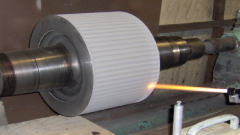
WEAR RESISTANT COATINGS
PROTECT AGAINST ABRASION, EROSION, CORROSION, FRETTING/GALLING, CAVITATION, BRINELLING.
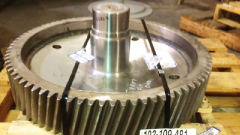
REPAIR COATINGS
NO NEED TO SCRAP AN EXPENSIVE PART. REPAIR OR BUILD UP TO A SPECIFIED SIZE. EXTEND PART LIFE.
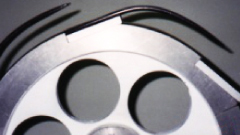
RELEASE COATINGS
FEATURING DURA-SLIK™ FLUOROPOLYMER COMBINED WITH THERMAL SPRAYED COATING PROVIDES WEAR RESISTANCE ALONG WITH RELEASE PROPERTIES.
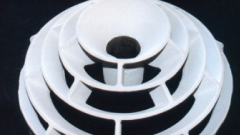
THERMAL BARRIER PROTECTION COATINGS
RESISTS TEMPERATURES UP TO 3000° F. ALLOWS THE USE OF LESS EXPENSIVE SUBSTRATE.
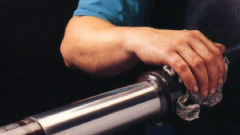
LOW COEFFICIENTOF FRICTION COATINGS
COATED COMPONENTS HAVE THE ABILITY TO PERFORM AT HIGHER SPEEDS.
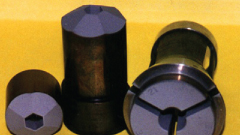
SURFACE TRACTION COATINGS
Long lasting surface finishes that prevent slippage, interruptions & breaks. Improves web tracking and tension control.
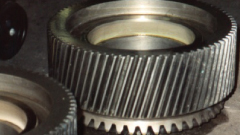
BRUSH PLATING
Repair or rebuild to a specified size, tolerance and surface finish. Plate an entire surface or target a small localized area.
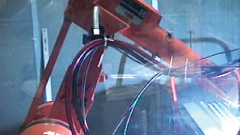
GENERAL CAPABILITIES
Services, coating features, part size capability.
HVOF Coating: High-Performance Surface Protection for Critical Industrial Components
HVOF Coating: The Industry Standard for Superior Wear and Corrosion Resistance
Industrial machinery operates in some of the harshest environments imaginable. Components are constantly exposed to abrasion, corrosion, erosion, heat, and impact that gradually degrade performance and shorten equipment life. Replacing expensive parts can significantly increase maintenance costs and production downtime.
High Velocity Oxygen Fuel (HVOF) coating has become one of the most effective surface engineering solutions for extending component life while restoring performance. By producing extremely dense, well-bonded coatings with exceptional hardness and low porosity, HVOF coating provides long-lasting protection for mission-critical equipment across numerous industries.
What Is HVOF Coating?
HVOF coating is an advanced thermal spray process that applies high-performance metallic, carbide, and alloy coatings onto engineered surfaces.
The process combines oxygen and fuel—typically kerosene, propane, propylene, hydrogen, or natural gas—inside a combustion chamber. The resulting high-pressure combustion produces a supersonic gas stream capable of accelerating powder particles to velocities often exceeding 2,000 feet per second (600+ m/s).
These semi-molten particles impact the component surface at extremely high velocity, flattening and mechanically bonding to form an exceptionally dense protective coating.
Unlike traditional welding or hardfacing, HVOF coating produces minimal heat input, preserving the integrity of the base material while delivering outstanding coating performance.
How the HVOF Process Works
The HVOF coating process involves several precision-controlled steps to ensure optimal coating quality.
1. Surface Preparation
Proper surface preparation is critical for coating adhesion. Components are thoroughly cleaned and grit blasted to create the ideal surface profile for mechanical bonding.
2. Powder Injection
Engineered powder materials are injected into the combustion chamber where they are heated to a semi-molten state.
3. High-Velocity Spraying
The combustion gases accelerate the powder toward the component at supersonic velocity.
4. Particle Impact
The particles flatten upon impact and rapidly solidify, building dense coating layers with exceptional adhesion.
5. Finishing Operations
After coating, components may undergo precision grinding, machining, or polishing to achieve exact dimensional tolerances and surface finishes.
Advantages of HVOF Coating
HVOF technology offers several advantages over conventional coating and repair methods.
Exceptional Wear Resistance
Dense carbide coatings significantly reduce abrasive wear, extending the service life of shafts, rollers, pumps, and hydraulic components.
Outstanding Corrosion Protection
Low-porosity coatings prevent moisture and chemicals from penetrating the surface, protecting critical equipment in aggressive operating environments.
Superior Bond Strength
High particle velocities create excellent mechanical bonding that withstands demanding service conditions.
Low Porosity
Compared to many thermal spray processes, HVOF coatings exhibit extremely low porosity, resulting in improved durability and corrosion resistance.
High Hardness
Materials such as tungsten carbide-cobalt coatings can achieve hardness levels exceeding 1,200 HV, making them ideal for severe wear applications.
Minimal Heat Distortion
Because HVOF introduces relatively little heat into the substrate, distortion and metallurgical changes to the base material are minimized.
Extended Equipment Life
Protecting high-value components delays replacement, reduces downtime, and lowers lifecycle costs.
Common HVOF Coating Materials
Selecting the proper coating material depends on the operating environment and performance requirements.
Tungsten Carbide-Cobalt (WC-Co)
One of the industry’s most popular HVOF materials, tungsten carbide coatings provide exceptional abrasion resistance and high hardness.
Applications include:
- Hydraulic rods
- Pump shafts
- Sleeves
- Rollers
- Industrial tooling
Tungsten Carbide-Cobalt-Chromium (WC-CoCr)
Provides excellent wear resistance while offering enhanced corrosion protection in marine and chemical environments.
Chromium Carbide-Nickel Chromium (Cr₃C₂-NiCr)
Designed for elevated-temperature service where oxidation and hot corrosion resistance are required.
Typical industries include:
- Power generation
- Aerospace
- Petrochemical processing
Nickel-Based Alloys
Nickel alloy coatings improve corrosion resistance and protect components exposed to harsh chemicals.
Cobalt-Based Alloys
These coatings perform exceptionally well in high-temperature environments requiring oxidation resistance and wear protection.
Industries That Benefit from HVOF Coating
HVOF coating has become an essential technology across numerous industrial sectors.
Oil and Gas
Equipment experiences severe wear from sand, drilling fluids, corrosive chemicals, and high-pressure operation.
Common applications include:
- Valve components
- Pump shafts
- Drill equipment
- Compressor components
Power Generation
Steam turbines, gas turbines, and boiler equipment require coatings that resist erosion, corrosion, and thermal degradation.
Aerospace
Aircraft components demand lightweight, durable coatings capable of resisting wear without compromising dimensional accuracy.
Mining
Mining operations expose equipment to continuous abrasion from ore, rock, and slurry.
Typical coated components include:
- Crushers
- Conveyor rollers
- Pump components
- Excavation equipment
Manufacturing
Industrial production equipment benefits from improved wear resistance and reduced maintenance intervals.
Applications include:
- Rollers
- Dies
- Molds
- Machine shafts
- Production tooling
Pulp and Paper
HVOF coatings protect equipment exposed to chemicals, moisture, and abrasive pulp materials.
Marine
Marine equipment benefits from enhanced corrosion protection in saltwater environments.
HVOF Coating vs. Hard Chrome Plating
Many industries are replacing hard chrome plating with HVOF coatings because of performance and environmental considerations.
| Feature | HVOF Coating | Hard Chrome Plating |
| Wear Resistance | Excellent | Very Good |
| Corrosion Resistance | Excellent | Moderate |
| Porosity | Very Low | Higher |
| Coating Density | Extremely Dense | Moderate |
| Environmental Impact | Lower | Hexavalent chromium concerns |
| Bond Strength | Excellent | Good |
| Service Life | Longer in severe applications | Good |
HVOF coatings often provide superior performance in high-wear environments where extended component life is essential.
Why Surface Preparation Matters
Even the highest-quality coating depends on proper substrate preparation.
Professional HVOF application includes:
- Precision cleaning
- Controlled grit blasting
- Surface roughness verification
- Material compatibility assessment
- Coating thickness control
- Quality inspection
These steps ensure maximum adhesion and long-term coating performance.
Repairing Components with HVOF Coating
HVOF coating is not only used on new parts—it is also an effective solution for restoring worn or damaged components.
Instead of replacing expensive equipment, many manufacturers choose to rebuild components through:
- Dimensional restoration
- Wear surface renewal
- Corrosion damage repair
- Seal surface rebuilding
- Shaft restoration
This repair approach often results in significant cost savings while reducing downtime.
Quality Matters in HVOF Coating
The success of an HVOF coating project depends on more than simply applying a coating. Equipment calibration, powder selection, spray parameters, and operator expertise all influence coating performance.
At Metallic Bonds, Ltd., every project is approached with a commitment to quality, precision, and long-term reliability. With more than 30 years of experience, the company provides comprehensive thermal spray coating services, brush plating, and machine component repair solutions tailored to demanding industrial applications.
Whether protecting new components or restoring worn equipment, Metallic Bonds, Ltd. delivers engineered surface solutions designed to extend service life, improve equipment performance, and reduce maintenance costs.
Partner with Metallic Bonds, Ltd. for Advanced HVOF Coating Solutions
When equipment reliability and component longevity are critical, HVOF coating offers one of the most effective surface engineering solutions available. Its dense microstructure, exceptional wear resistance, and outstanding corrosion protection make it the preferred choice for industries that demand high-performance coatings.
For more than three decades, Metallic Bonds, Ltd. has helped manufacturers, processing facilities, power plants, mining operations, and heavy industries protect valuable assets through advanced thermal spray technologies and precision component repair services.
If you’re looking to improve equipment durability, reduce downtime, and maximize the return on your maintenance investment, Metallic Bonds, Ltd. has the expertise and capabilities to provide the right HVOF coating solution for your application.