
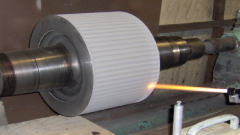
WEAR RESISTANT COATINGS
PROTECT AGAINST ABRASION, EROSION, CORROSION, FRETTING/GALLING, CAVITATION, BRINELLING.
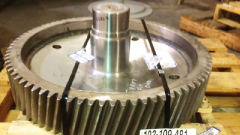
REPAIR COATINGS
NO NEED TO SCRAP AN EXPENSIVE PART. REPAIR OR BUILD UP TO A SPECIFIED SIZE. EXTEND PART LIFE.
RELEASE COATINGS
FEATURING DURA-SLIK™ FLUOROPOLYMER COMBINED WITH THERMAL SPRAYED COATING PROVIDES WEAR RESISTANCE ALONG WITH RELEASE PROPERTIES.
THERMAL BARRIER PROTECTION COATINGS
RESISTS TEMPERATURES UP TO 3000° F. ALLOWS THE USE OF LESS EXPENSIVE SUBSTRATE.
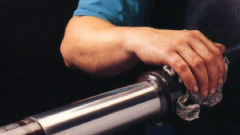
LOW COEFFICIENTOF FRICTION COATINGS
COATED COMPONENTS HAVE THE ABILITY TO PERFORM AT HIGHER SPEEDS.
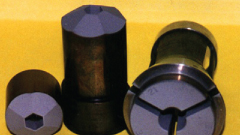
SURFACE TRACTION COATINGS
Long lasting surface finishes that prevent slippage, interruptions & breaks. Improves web tracking and tension control.
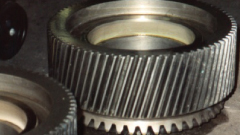
BRUSH PLATING
Repair or rebuild to a specified size, tolerance and surface finish. Plate an entire surface or target a small localized area.
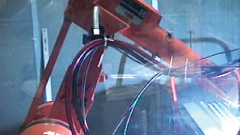
GENERAL CAPABILITIES
Services, coating features, part size capability.
Titanium Nitride Coating: A High-Performance Surface Solution for Wear, Friction, and Corrosion Resistance
Titanium nitride coating has become one of the most widely recognized surface engineering solutions for improving the performance and longevity of industrial components. Known for its exceptional hardness, wear resistance, low coefficient of friction, and distinctive gold appearance, titanium nitride (TiN) is commonly applied to cutting tools, dies, molds, medical instruments, aerospace components, and precision machinery.
As industries continue demanding longer equipment life, higher production efficiency, and reduced maintenance costs, titanium nitride coating remains an effective solution for protecting critical components against abrasive wear, galling, and moderate corrosion.
What Is Titanium Nitride Coating?
Titanium nitride coating is a ceramic-based hard coating composed of titanium and nitrogen. It is typically deposited onto metal substrates using Physical Vapor Deposition (PVD) processes under vacuum conditions.
The resulting coating forms a thin, dense layer that significantly increases surface hardness while maintaining the dimensional accuracy of precision components.
Unlike conventional plating methods, titanium nitride coating alters only the surface characteristics of a component without changing its core mechanical properties.
This makes TiN an excellent choice for high-precision parts where tight tolerances must be maintained.
How Titanium Nitride Coating Works
During the PVD coating process, titanium is vaporized inside a vacuum chamber while nitrogen gas reacts with the titanium atoms.
The titanium nitride molecules condense onto the workpiece surface, forming an extremely hard ceramic coating that bonds metallurgically to the substrate.
The finished coating typically ranges from:
- 1–5 microns thick
- Surface hardness exceeding 2,000 HV
- Low coefficient of friction
- High adhesion strength
- Excellent wear resistance
Because of its thin deposition, titanium nitride coating preserves critical dimensions while dramatically improving surface performance.
Key Properties of Titanium Nitride Coating
Titanium nitride coating offers a unique combination of mechanical and tribological advantages.
Exceptional Hardness
One of the biggest benefits of titanium nitride coating is its extremely high hardness.
Compared to untreated steel surfaces, TiN-coated components exhibit significantly greater resistance to:
- Abrasive wear
- Adhesive wear
- Surface scratching
- Plastic deformation
This helps extend component service life in demanding industrial environments.
Superior Wear Resistance
Industrial machinery experiences continuous friction between mating surfaces.
Titanium nitride coating minimizes surface degradation caused by:
- Sliding contact
- Rolling contact
- Particle abrasion
- Metal-to-metal interaction
This reduces replacement frequency and lowers maintenance costs.
Low Coefficient of Friction
TiN coatings create smoother sliding surfaces.
Reduced friction provides several operational advantages:
- Lower operating temperatures
- Reduced adhesive wear
- Less galling
- Improved machining performance
- Increased tooling life
These characteristics are especially valuable for cutting tools and forming dies.
Improved Corrosion Resistance
Although titanium nitride coating is primarily selected for wear protection, it also offers moderate corrosion resistance.
The dense ceramic layer helps shield substrates from:
- Moisture
- Oxidation
- Mild chemical exposure
- Industrial contaminants
For highly corrosive environments, TiN may be combined with other engineered coating systems depending on application requirements.
Thermal Stability
Titanium nitride maintains its hardness at elevated temperatures.
This makes it suitable for:
- High-speed machining
- Hot forming operations
- Injection molding
- Aerospace applications
Its thermal stability contributes to consistent performance under cyclic loading conditions.
Industries That Use Titanium Nitride Coating
Titanium nitride coating serves a wide range of manufacturing sectors.
Aerospace
Aircraft components require lightweight materials capable of withstanding severe wear conditions.
Typical coated components include:
- Bearings
- Fasteners
- Actuator components
- Precision mechanical assemblies
Automotive Manufacturing
Automotive production uses TiN-coated tooling for:
- Stamping dies
- Punches
- Forming tools
- Injection mold components
Longer tool life improves manufacturing productivity.
Medical Devices
Medical instruments often receive titanium nitride coating because it offers:
- Excellent wear resistance
- Smooth surface finish
- Increased hardness
- Biocompatibility for many applications
Examples include surgical instruments and orthopedic tooling.
Oil and Gas
Equipment operating in abrasive environments benefits from TiN-coated surfaces that resist:
- Erosion
- Sliding wear
- Mechanical damage
Common applications include valves, shafts, and precision sealing components.
Industrial Manufacturing
General manufacturing frequently applies titanium nitride coating to:
- Cutting tools
- Drill bits
- Milling cutters
- Reamers
- Punches
- Dies
- Fixtures
- Machine components
These coatings help increase productivity while minimizing downtime.
Titanium Nitride Coating vs. Hard Chrome Plating
Although both processes improve surface durability, they serve different engineering objectives.
|
Feature |
Titanium Nitride Coating |
Hard Chrome |
|
Process |
Physical Vapor Deposition |
Electroplating |
|
Hardness |
Extremely high |
High |
|
Thickness |
Thin (1–5 µm) |
Much thicker |
|
Dimensional Change |
Minimal |
Greater |
|
Wear Resistance |
Excellent |
Very good |
|
Friction |
Very low |
Moderate |
|
Environmental Impact |
Cleaner process |
Uses hexavalent chromium in traditional processes |
Application requirements determine which coating system offers the best overall performance.
Titanium Nitride Coating vs. Thermal Spray Coatings
While titanium nitride coating excels in precision applications requiring extremely thin hard coatings, thermal spray coatings provide different performance advantages.
Thermal spray technologies can produce:
- Much thicker coatings
- Structural rebuild capability
- Corrosion protection
- High-temperature resistance
- Wear-resistant overlays
- Dimensional restoration
Rather than competing technologies, titanium nitride coating and thermal spray coatings often complement one another depending on operating conditions.
Factors to Consider Before Selecting Titanium Nitride Coating
Several engineering considerations influence coating selection.
These include:
- Base material compatibility
- Operating temperature
- Contact stresses
- Surface finish requirements
- Component geometry
- Corrosive exposure
- Lubrication conditions
- Required service life
A complete engineering evaluation ensures the coating delivers optimal long-term performance.
Why Surface Engineering Matters
Modern manufacturers face increasing pressure to reduce maintenance costs while maximizing equipment availability.
Advanced surface engineering technologies—including titanium nitride coating, thermal spray coating, and precision repair processes—help organizations achieve:
- Longer equipment life
- Reduced downtime
- Improved production efficiency
- Lower lifecycle costs
- Better component reliability
Rather than replacing expensive equipment, many organizations restore and protect valuable components using engineered coating solutions.
Metallic Bonds, Ltd.: Over 30 Years of Industrial Surface Engineering Expertise
For more than three decades, Metallic Bonds, Ltd. has delivered reliable industrial coating and repair solutions that help manufacturers extend component life and improve equipment performance.
Our expertise includes:
- Thermal spray coating services
- Machine component repair
- Brush plating
- Wear-resistant surface restoration
- Corrosion protection
- Precision dimensional recovery
- Industrial maintenance solutions
Whether supporting heavy industry, manufacturing, power generation, or process equipment, Metallic Bonds partners with customers to develop cost-effective solutions that improve productivity while reducing equipment replacement costs.
Titanium nitride coating continues to be one of the industry’s most effective hard coating technologies for improving wear resistance, reducing friction, and extending component life. Its exceptional hardness, dimensional precision, and durability make it a preferred solution for cutting tools, precision machinery, aerospace components, medical instruments, and numerous industrial applications.
When combined with expert surface engineering services, the right coating strategy can significantly improve equipment reliability, reduce maintenance expenses, and increase operational efficiency. With more than 30 years of experience in thermal spray coating services, brush plating, and machine component repairs, Metallic Bonds, Ltd. provides the technical expertise manufacturers need to protect critical assets and maximize long-term performance.