
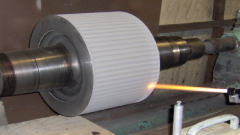
WEAR RESISTANT COATINGS
PROTECT AGAINST ABRASION, EROSION, CORROSION, FRETTING/GALLING, CAVITATION, BRINELLING.
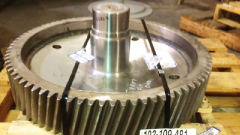
REPAIR COATINGS
NO NEED TO SCRAP AN EXPENSIVE PART. REPAIR OR BUILD UP TO A SPECIFIED SIZE. EXTEND PART LIFE.
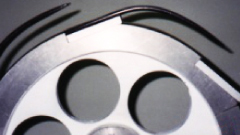
RELEASE COATINGS
FEATURING DURA-SLIK™ FLUOROPOLYMER COMBINED WITH THERMAL SPRAYED COATING PROVIDES WEAR RESISTANCE ALONG WITH RELEASE PROPERTIES.
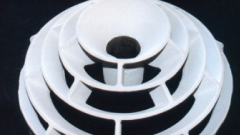
THERMAL BARRIER PROTECTION COATINGS
RESISTS TEMPERATURES UP TO 3000° F. ALLOWS THE USE OF LESS EXPENSIVE SUBSTRATE.
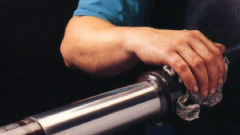
LOW COEFFICIENTOF FRICTION COATINGS
COATED COMPONENTS HAVE THE ABILITY TO PERFORM AT HIGHER SPEEDS.
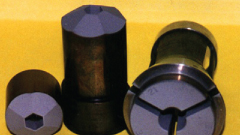
SURFACE TRACTION COATINGS
Long lasting surface finishes that prevent slippage, interruptions & breaks. Improves web tracking and tension control.
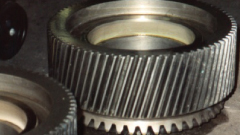
BRUSH PLATING
Repair or rebuild to a specified size, tolerance and surface finish. Plate an entire surface or target a small localized area.
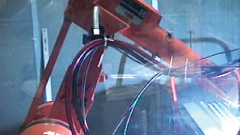
GENERAL CAPABILITIES
Services, coating features, part size capability.
Hard Chrome Plating: Enhancing Wear Resistance, Precision, and Component Performance
Hard Chrome Plating for Industrial Equipment and Machine Component Restoration
Industrial machinery operates under demanding conditions where components are exposed to constant friction, heavy loads, corrosion, and abrasive wear. Without proper surface protection, critical parts can experience premature failure, increased maintenance costs, and costly production downtime.
Hard chrome plating remains one of the most trusted engineering surface treatments for improving wear resistance, restoring dimensional accuracy, and extending the service life of industrial components. Whether used on new parts or worn equipment, hard chrome provides a durable, low-friction surface capable of performing in some of the industry’s toughest environments.
What Is Hard Chrome Plating?
Hard chrome plating, sometimes referred to as industrial chrome plating or engineering chrome, is an electroplating process that deposits a thick layer of chromium onto a metal substrate. Unlike decorative chrome plating, which is applied primarily for appearance, hard chrome is engineered specifically to improve the mechanical and tribological properties of industrial components.
The chromium layer significantly increases:
- Surface hardness
- Wear resistance
- Abrasion resistance
- Corrosion resistance
- Galling resistance
- Reduced coefficient of friction
Hard chrome deposits typically range from 0.0005 inches to over 0.020 inches, depending on the application and restoration requirements. The coating can also be precision-ground after plating to restore exact dimensional tolerances and surface finishes.
How Hard Chrome Plating Works
The hard chrome plating process involves carefully controlled electrochemical deposition.
Typical process steps include:
- Component inspection
- Cleaning and degreasing
- Surface preparation
- Masking of non-plated areas
- Electroplating in a chromic acid solution
- Thickness verification
- Precision grinding or polishing
- Final quality inspection
Maintaining strict control over current density, plating time, temperature, and bath chemistry ensures uniform coating thickness and consistent hardness throughout the finished component.
Mechanical Properties of Hard Chrome
One of the primary reasons industries continue to rely on hard chrome plating is its exceptional combination of hardness and durability.
Typical properties include:
|
Property |
Typical Value |
|
Hardness |
65–70 HRC |
|
Coefficient of Friction |
Low |
|
Wear Resistance |
Excellent |
|
Abrasion Resistance |
Excellent |
|
Corrosion Resistance |
Good |
|
Adhesion |
Excellent when properly applied |
|
Operating Temperature |
Suitable for many industrial environments |
These characteristics make hard chrome particularly effective for components subjected to repeated sliding contact, heavy loading, and abrasive operating conditions.
Common Industrial Applications
Hard chrome plating is widely used across numerous industries where machinery reliability is essential.
Typical components include:
- Hydraulic cylinders
- Hydraulic rods
- Piston rods
- Pump shafts
- Compressor shafts
- Rollers
- Bearing journals
- Valve components
- Dies and molds
- Printing rollers
- Textile machinery
- Packaging equipment
- Steel mill components
- Mining equipment
- Construction machinery
- Marine equipment
- Agricultural machinery
- Power generation equipment
The ability to restore worn dimensions rather than replacing expensive components makes hard chrome plating an economical maintenance solution.
Benefits of Hard Chrome Plating
Outstanding Wear Resistance
Hard chrome dramatically improves resistance to abrasive wear, extending the operational life of components subjected to continuous friction.
Dimensional Restoration
Worn shafts, journals, and precision surfaces can be rebuilt to original specifications through controlled chrome deposition followed by precision machining.
Lower Friction
The smooth chromium surface reduces friction between mating components, minimizing heat generation and improving mechanical efficiency.
Improved Corrosion Protection
Although hard chrome is primarily selected for wear resistance, it also provides increased protection against oxidation and corrosive industrial environments when properly maintained.
Increased Equipment Reliability
Reduced wear translates directly into:
- Longer maintenance intervals
- Lower replacement costs
- Reduced downtime
- Improved production efficiency
Industries That Depend on Hard Chrome
Hard chrome plating is critical in industries requiring high-performance machine components.
Industries served include:
- Manufacturing
- Mining
- Oil and gas
- Pulp and paper
- Steel production
- Food processing
- Marine
- Aerospace support industries
- Construction
- Agriculture
- Power generation
- Heavy equipment repair
Each industry relies on precision-machined components that must maintain dimensional accuracy despite continuous mechanical stress.
Hard Chrome vs. Thermal Spray Coatings
While hard chrome remains an industry standard, thermal spray coatings have become an increasingly attractive alternative for many applications.
|
Hard Chrome |
Thermal Spray |
|
Electroplated chromium |
Mechanically bonded coating |
|
Excellent wear resistance |
Superior wear resistance in many applications |
|
Good corrosion resistance |
Can provide exceptional corrosion protection depending on coating |
|
Lower coating thickness options |
Wide variety of coating materials |
|
Requires electroplating process |
No electrochemical deposition |
|
Suitable for precision dimensional restoration |
Ideal for severe wear and high-temperature environments |
Selecting the right coating depends on operating temperature, loading conditions, corrosion exposure, required hardness, and repair objectives.
At Metallic Bonds, Ltd., our experienced team evaluates each application to recommend the most effective surface engineering solution for long-term performance.
Hard Chrome vs. Brush Plating
Although both processes involve electroplating, they serve different purposes.
Hard chrome plating generally requires tank immersion and is ideal for complete component restoration.
Brush plating, on the other hand, allows localized metal deposition directly onto installed equipment or areas requiring selective repair without complete disassembly.
Brush plating is particularly valuable for:
- On-site repairs
- Bearing fits
- Seal surfaces
- Localized wear
- Precision dimensional restoration
Choosing the appropriate process depends on accessibility, repair scope, and production requirements.
Factors Affecting Hard Chrome Performance
Several variables influence coating longevity and overall performance:
- Base material compatibility
- Surface preparation quality
- Proper coating thickness
- Grinding accuracy
- Operating loads
- Lubrication conditions
- Environmental exposure
- Preventive maintenance practices
Proper engineering and application ensure maximum coating life while maintaining dimensional precision.
Why Professional Application Matters
Industrial hard chrome plating demands precise process control and extensive technical expertise. Inconsistent plating thickness, poor adhesion, or inadequate surface preparation can significantly reduce coating performance.
Working with an experienced industrial coating specialist ensures:
- Accurate dimensional restoration
- Uniform coating thickness
- Excellent adhesion
- Consistent hardness
- Reliable quality control
- Long-term equipment performance
Why Choose Metallic Bonds, Ltd.?
For more than three decades, Metallic Bonds, Ltd. has helped industrial facilities restore and protect critical machinery through advanced surface engineering solutions.
Our capabilities include:
- Hard chrome alternatives through advanced thermal spray coatings
- Thermal spray coating services
- Brush plating
- Machine component repair
- Precision restoration of worn industrial equipment
- Surface engineering solutions tailored to demanding industrial environments
Our experienced technicians work closely with manufacturers, maintenance teams, and industrial facilities to extend equipment life, improve operational efficiency, and reduce maintenance costs through proven repair and coating technologies.
Extend the Life of Your Critical Equipment
When machine components begin to wear, replacement is not always the most economical solution. Surface restoration technologies such as hard chrome plating and advanced thermal spray coatings provide cost-effective alternatives that restore dimensional accuracy and improve long-term reliability.
Whether you need wear-resistant coatings, precision component repair, or expert guidance on the best surface engineering solution, Metallic Bonds, Ltd. has the experience and technical expertise to help keep your equipment operating at peak performance.