
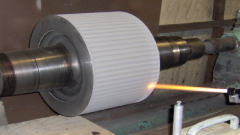
WEAR RESISTANT COATINGS
PROTECT AGAINST ABRASION, EROSION, CORROSION, FRETTING/GALLING, CAVITATION, BRINELLING.
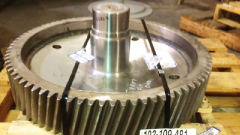
REPAIR COATINGS
NO NEED TO SCRAP AN EXPENSIVE PART. REPAIR OR BUILD UP TO A SPECIFIED SIZE. EXTEND PART LIFE.
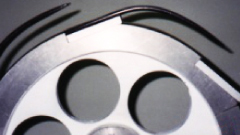
RELEASE COATINGS
FEATURING DURA-SLIK™ FLUOROPOLYMER COMBINED WITH THERMAL SPRAYED COATING PROVIDES WEAR RESISTANCE ALONG WITH RELEASE PROPERTIES.
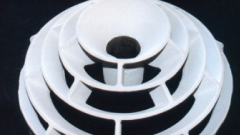
THERMAL BARRIER PROTECTION COATINGS
RESISTS TEMPERATURES UP TO 3000° F. ALLOWS THE USE OF LESS EXPENSIVE SUBSTRATE.
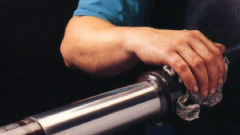
LOW COEFFICIENTOF FRICTION COATINGS
COATED COMPONENTS HAVE THE ABILITY TO PERFORM AT HIGHER SPEEDS.
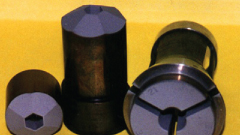
SURFACE TRACTION COATINGS
Long lasting surface finishes that prevent slippage, interruptions & breaks. Improves web tracking and tension control.
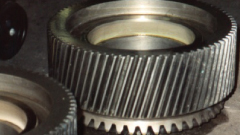
BRUSH PLATING
Repair or rebuild to a specified size, tolerance and surface finish. Plate an entire surface or target a small localized area.
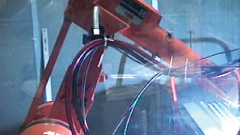
GENERAL CAPABILITIES
Services, coating features, part size capability.
Low Coefficient of Friction Coatings: Reducing Wear, Improving Efficiency, and Extending Component Life
Friction is one of the leading causes of wear, energy loss, heat generation, and premature equipment failure in industrial environments. Whether in aerospace, automotive manufacturing, power generation, oil and gas, food processing, or heavy equipment, excessive friction can significantly reduce equipment performance and increase maintenance costs.
Low-coefficient-of-friction (low-COF) coatings are engineered surface treatments designed to minimize friction between mating components while enhancing wear resistance, corrosion protection, and operational efficiency. When properly selected and applied, these coatings help manufacturers increase equipment reliability, reduce downtime, and extend the service life of critical components.
For more than 30 years, Metallic Bonds, Ltd. has provided high-quality thermal spray coating services, brush plating, and machine component repair solutions for industries requiring superior surface engineering and long-lasting component performance.
What Are Low-Coefficient-of-Friction Coatings?
Low-coefficient-of-friction coatings are engineered coatings that reduce the resistance created when two surfaces slide against one another. The coefficient of friction (COF) is a numerical value that describes the amount of friction generated between contacting materials.
A lower coefficient means:
- Less sliding resistance
- Reduced wear
- Lower operating temperatures
- Improved energy efficiency
- Longer equipment life
Unlike conventional lubricants, many low-friction coatings provide solid lubrication, allowing components to continue operating under conditions where oils or greases may fail due to high temperatures, contamination, or vacuum environments.
Why Friction Matters in Industrial Equipment
Industrial machinery experiences continuous contact between moving components. Over time, friction causes:
- Surface wear
- Galling
- Seizing
- Fretting
- Material transfer
- Increased power consumption
- Heat buildup
- Dimensional loss
These issues accelerate equipment failure and increase maintenance frequency.
Low-friction coatings minimize direct metal-to-metal contact, preserving critical dimensions while improving equipment reliability.
How Low-Friction Coatings Work
These coatings create a specialized surface that reduces adhesion between contacting materials.
Depending on the application, coatings may provide:
- Solid lubrication
- Hard wear-resistant surfaces
- Reduced surface roughness
- Lower adhesive wear
- Improved release properties
- Enhanced corrosion resistance
Some coatings incorporate lubricating particles that continuously reduce friction during operation, while others rely on engineered surface textures or ceramic matrices.
Common Types of Low-Coefficient-of-Friction Coatings
Several coating technologies are available depending on operating conditions.
PTFE-Based Coatings
Polytetrafluoroethylene (PTFE) is one of the most widely recognized low-friction materials.
Benefits include:
- Extremely low friction
- Excellent chemical resistance
- Non-stick performance
- Reduced component wear
- Corrosion protection
Applications include:
- Valves
- Bearings
- Food processing equipment
- Packaging machinery
- Medical equipment
Molybdenum Disulfide (MoS₂)
MoS₂ provides exceptional lubrication where oils cannot be used.
Advantages include:
- Dry lubrication
- High load capacity
- Vacuum compatibility
- Low friction under extreme pressure
Common industries include:
- Aerospace
- Defense
- Precision manufacturing
- Semiconductor equipment
Tungsten Disulfide (WS₂)
WS₂ offers even lower friction than many traditional dry lubricants.
Benefits include:
- Extremely low coefficient of friction
- High load-bearing capability
- Excellent performance in vacuum environments
- Long wear life
Applications include:
- Aerospace mechanisms
- High-performance bearings
- Robotics
- Medical devices
Thermal Spray Low-Friction Coatings
Thermal spray technologies can apply engineered materials that combine:
- Wear resistance
- Low friction
- Corrosion resistance
- High hardness
- Dimensional restoration
Depending on the application, materials may include:
- Chromium carbide
- Tungsten carbide
- Composite coatings
- Ceramic-metal blends
These coatings perform well in harsh industrial environments involving abrasion, erosion, and high mechanical loads.
Ceramic Low-Friction Coatings
Advanced ceramics offer:
- High hardness
- Low wear
- Heat resistance
- Excellent sliding characteristics
They are commonly used in:
- Pumps
- Compressors
- Engine components
- Mechanical seals
Thermal Spray Technologies for Low-Friction Performance
Thermal spray processes allow engineers to tailor coating performance for demanding industrial applications.
Common methods include:
HVOF (High Velocity Oxygen Fuel)
HVOF produces dense coatings with:
- Exceptional bond strength
- Low porosity
- Excellent wear resistance
- Smooth surface finishes
These characteristics help reduce friction while resisting abrasion and erosion.
Plasma Spray
Plasma spraying enables deposition of ceramics and specialty materials capable of operating under:
- High temperatures
- Severe wear
- Chemical exposure
The process supports coatings requiring excellent thermal stability and dimensional control.
Wire Arc Spray
Wire arc spraying offers a cost-effective solution for larger industrial components requiring:
- Corrosion resistance
- Surface restoration
- Improved wear performance
Benefits of Low-Coefficient-of-Friction Coatings
Industrial organizations benefit from low-friction coatings in multiple ways.
Reduced Wear
Lower friction decreases surface damage and minimizes material loss.
This significantly extends component life.
Improved Energy Efficiency
Less friction means:
- Lower power consumption
- Reduced motor loads
- Improved equipment efficiency
This contributes to lower operating costs.
Lower Operating Temperatures
Friction generates heat.
Low-friction coatings reduce heat buildup, protecting surrounding components and lubricants.
Extended Maintenance Intervals
Reduced wear means:
- Fewer shutdowns
- Longer maintenance cycles
- Lower replacement costs
Corrosion Protection
Many low-friction coatings also serve as corrosion barriers, protecting equipment operating in:
- Marine environments
- Chemical plants
- Mining operations
- Food processing facilities
Improved Product Quality
In manufacturing operations, smoother equipment operation often results in:
- Better dimensional consistency
- Improved surface finishes
- Reduced production defects
Industrial Applications
Low-coefficient-of-friction coatings are used across numerous industries.
Aerospace
Applications include:
- Landing gear
- Actuator components
- Bushings
- Bearings
- Fasteners
Oil and Gas
Critical components include:
- Pump shafts
- Valve stems
- Compressor components
- Downhole equipment
Power Generation
Used on:
- Turbine shafts
- Bearings
- Wear rings
- Boiler equipment
Automotive Manufacturing
Coatings improve performance for:
- Pistons
- Transmission components
- Bearings
- Engine hardware
Food Processing
Food-grade low-friction coatings reduce sticking while improving sanitation for:
- Conveyor systems
- Packaging equipment
- Mixing systems
- Filling machinery
Heavy Industry
Applications include:
- Hydraulic cylinders
- Rollers
- Industrial shafts
- Mining equipment
- Material handling systems
Selecting the Right Low-Friction Coating
Choosing the appropriate coating requires evaluating several operating conditions.
Important factors include:
- Contact pressure
- Sliding speed
- Operating temperature
- Chemical exposure
- Abrasive wear
- Corrosive environments
- Surface finish requirements
- Component material
- Required coating thickness
A thorough engineering assessment ensures the coating provides optimal performance and long-term durability.
Repair and Restoration of Worn Components
Low-friction coatings are frequently used as part of a comprehensive repair strategy.
Instead of replacing expensive components, damaged surfaces can often be:
- Restored dimensionally
- Machined to specification
- Coated for improved performance
- Returned to service
This approach reduces capital expenditures while extending the usable life of valuable industrial equipment.
Why Work with Metallic Bonds, Ltd.?
For more than three decades, Metallic Bonds, Ltd. has helped manufacturers solve complex wear, corrosion, and surface engineering challenges through advanced coating technologies and precision repair services.
The company specializes in:
- Thermal spray coating services
- High-performance wear-resistant coatings
- Low-coefficient-of-friction coating solutions
- Brush plating
- Machine component repair
- Dimensional restoration
- Precision finishing
By combining technical expertise, proven coating processes, and quality craftsmanship, Metallic Bonds delivers engineered solutions that improve equipment reliability, reduce maintenance costs, and maximize component life across a wide range of industrial applications.
Low-coefficient-of-friction coatings are an essential solution for industries seeking to reduce wear, improve efficiency, and extend the life of critical equipment. Whether applied through advanced thermal spray processes or specialized solid lubricant technologies, these coatings help minimize friction, lower operating temperatures, reduce energy consumption, and protect components from wear and corrosion in demanding environments.
With more than 30 years of experience in thermal spray coating services, brush plating, and machine component repair, Metallic Bonds, Ltd. provides the technical expertise and precision surface engineering needed to keep industrial equipment operating at peak performance.