
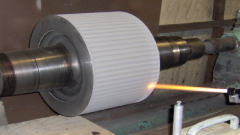
WEAR RESISTANT COATINGS
PROTECT AGAINST ABRASION, EROSION, CORROSION, FRETTING/GALLING, CAVITATION, BRINELLING.
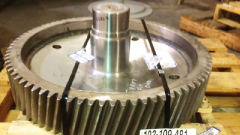
REPAIR COATINGS
NO NEED TO SCRAP AN EXPENSIVE PART. REPAIR OR BUILD UP TO A SPECIFIED SIZE. EXTEND PART LIFE.
RELEASE COATINGS
FEATURING DURA-SLIK™ FLUOROPOLYMER COMBINED WITH THERMAL SPRAYED COATING PROVIDES WEAR RESISTANCE ALONG WITH RELEASE PROPERTIES.
THERMAL BARRIER PROTECTION COATINGS
RESISTS TEMPERATURES UP TO 3000° F. ALLOWS THE USE OF LESS EXPENSIVE SUBSTRATE.
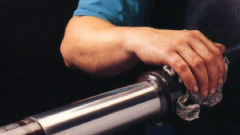
LOW COEFFICIENTOF FRICTION COATINGS
COATED COMPONENTS HAVE THE ABILITY TO PERFORM AT HIGHER SPEEDS.
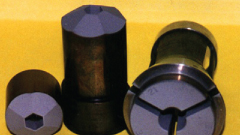
SURFACE TRACTION COATINGS
Long lasting surface finishes that prevent slippage, interruptions & breaks. Improves web tracking and tension control.
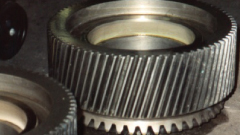
BRUSH PLATING
Repair or rebuild to a specified size, tolerance and surface finish. Plate an entire surface or target a small localized area.
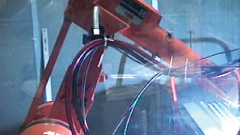
GENERAL CAPABILITIES
Services, coating features, part size capability.
Tungsten Carbide: Properties, Applications, and Why It Matters in Industrial Coatings
Tungsten Carbide: The Gold Standard for Wear Resistance
In industries where components are exposed to severe abrasion, erosion, impact, and friction, selecting the right protective material can dramatically extend equipment life and reduce maintenance costs. Among the most trusted engineering materials is tungsten carbide, a compound renowned for its exceptional hardness, wear resistance, and long-term durability.
Whether protecting manufacturing equipment, mining machinery, oil and gas components, or aerospace parts, tungsten carbide has become a critical material for extending service life under demanding operating conditions.
What Is Tungsten Carbide?
Tungsten carbide (WC) is a compound created by combining tungsten and carbon atoms. The result is an extremely hard ceramic-metal material, often referred to as a cemented carbide when combined with a metallic binder such as cobalt or nickel.
This unique composition offers a combination of:
- Exceptional hardness
- High compressive strength
- Outstanding abrasion resistance
- Excellent erosion resistance
- Good corrosion resistance (depending on binder selection)
- Long service life
On the Mohs hardness scale, tungsten carbide ranks around 9, making it one of the hardest engineering materials available—second only to diamond among commonly used industrial materials.
Key Properties of Tungsten Carbide
Tungsten carbide’s popularity stems from its outstanding mechanical and physical characteristics.
Extreme Hardness
Its high hardness enables components to resist scratching, abrasive wear, and material removal even under continuous operation.
Superior Wear Resistance
Tungsten carbide performs exceptionally well in environments involving:
- Sliding wear
- Abrasive particles
- Surface contact
- High-load operation
- Material handling
High Compressive Strength
Unlike many materials that deform under heavy loads, tungsten carbide maintains its structural integrity under significant mechanical stress.
Thermal Stability
Tungsten carbide retains much of its hardness at elevated temperatures, making it suitable for demanding industrial processes.
Corrosion Resistance
When combined with corrosion-resistant binders, tungsten carbide coatings can provide both wear and chemical protection.
Why Tungsten Carbide Is Used in Thermal Spray Coatings
Rather than manufacturing entire components from solid tungsten carbide—which can be expensive—many industries apply tungsten carbide coatings using thermal spray technologies.
This approach combines the strength of the base material with the protective characteristics of tungsten carbide.
Benefits include:
- Reduced replacement costs
- Longer equipment life
- Lower maintenance frequency
- Improved productivity
- Enhanced surface hardness
- Better resistance to erosion and abrasion
Thermal spray coatings allow damaged or worn components to be restored rather than replaced, delivering significant cost savings.
Common Thermal Spray Processes
Several thermal spray methods can deposit tungsten carbide coatings.
HVOF (High Velocity Oxygen Fuel)
HVOF is considered the preferred process for tungsten carbide coatings because it produces:
- Dense coating structures
- Low porosity
- Excellent bond strength
- High wear resistance
- Minimal oxidation
The high particle velocity creates exceptionally durable coatings suitable for severe industrial service.
Plasma Spray
Plasma spraying can also be used to apply tungsten carbide coatings, although HVOF generally produces superior wear characteristics for many applications.
The appropriate process depends on operating conditions, substrate material, and desired coating properties.
Industrial Applications of Tungsten Carbide
Because of its exceptional wear resistance, tungsten carbide is used across numerous industries.
Mining Equipment
Mining operations expose machinery to constant abrasion from rock, sand, and minerals.
Typical coated components include:
- Drill components
- Crusher parts
- Chutes
- Pump sleeves
- Wear plates
Oil and Gas
Oilfield equipment frequently encounters sand, drilling fluids, and corrosive environments.
Common applications include:
- Valve components
- Pump shafts
- Sleeves
- Seal surfaces
- Drilling equipment
Manufacturing
Production facilities rely on tungsten carbide to extend tool life and reduce downtime.
Applications include:
- Rollers
- Dies
- Cutting tools
- Guide rails
- Industrial shafts
Aerospace
Aircraft components often require coatings that provide high wear resistance while maintaining dimensional precision.
Tungsten carbide coatings help protect:
- Landing gear components
- Hydraulic systems
- Actuator shafts
- Bearing surfaces
Power Generation
Power plants use tungsten carbide coatings to protect equipment from erosion and high-velocity particles.
Examples include:
- Turbine components
- Pump parts
- Valves
- Rotating equipment
Advantages of Tungsten Carbide Coatings
Industrial facilities choose tungsten carbide coatings because they offer several measurable benefits.
Extended Equipment Life
Protective coatings significantly reduce wear, allowing components to remain in service longer.
Lower Maintenance Costs
Less wear translates into fewer repairs and reduced maintenance intervals.
Reduced Downtime
Longer-lasting components improve equipment availability and overall productivity.
Improved Performance
Smooth, wear-resistant surfaces maintain tighter tolerances and consistent operating efficiency.
Cost Savings
Repairing and recoating existing components is often substantially more economical than purchasing replacements.
Tungsten Carbide vs. Hard Chrome
For many years, hard chrome plating served as a standard wear-resistant surface treatment. Today, many industries are transitioning to tungsten carbide coatings due to several performance advantages.
| Feature | Tungsten Carbide | Hard Chrome |
| Hardness | Excellent | Very Good |
| Wear Resistance | Outstanding | Good |
| Erosion Resistance | Excellent | Moderate |
| Service Life | Longer | Shorter |
| Environmental Considerations | More environmentally friendly process options | Increasing regulatory restrictions |
In demanding wear environments, tungsten carbide coatings often provide superior long-term value.
Selecting the Right Tungsten Carbide Coating
Not all tungsten carbide coatings are identical.
Performance depends on several factors:
- Powder composition
- Binder material
- Particle size
- Coating thickness
- Surface preparation
- Thermal spray process
- Operating environment
Working with an experienced coating specialist ensures the coating is tailored to the application’s specific wear mechanisms and service conditions.
Why Choose Metallic Bonds, Ltd.
For over three decades, Metallic Bonds, Ltd. has delivered high-quality industrial coating solutions that improve equipment reliability and extend component life.
The company’s expertise includes:
- Thermal spray coatings
- Tungsten carbide coatings
- HVOF coating services
- Brush plating
- Machine component repair
- Precision surface restoration
By evaluating each application individually, Metallic Bonds recommends coating systems designed to maximize durability, reduce operating costs, and improve overall equipment performance.
Tungsten carbide remains one of the most effective materials available for combating wear, abrasion, and erosion in industrial environments. Its remarkable hardness, exceptional durability, and compatibility with advanced thermal spray processes make it an ideal solution for protecting valuable equipment across numerous industries.
When applied by experienced coating professionals, tungsten carbide coatings can significantly increase component lifespan, reduce maintenance expenses, and improve operational efficiency. For organizations seeking reliable surface engineering solutions, partnering with an experienced provider like Metallic Bonds, Ltd. ensures access to proven technologies that keep critical equipment operating at peak performance.